Moonshot
 27
27
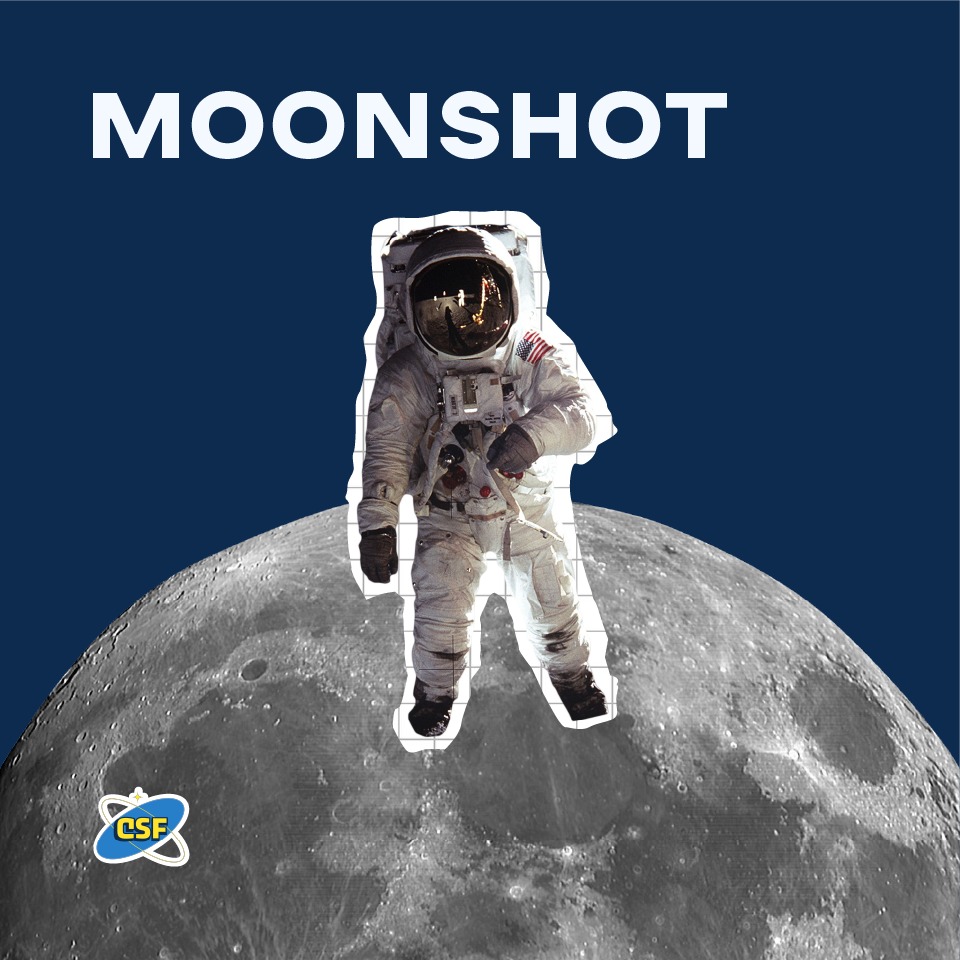
A Wikipedia project whose main goal was to write 12 Good Articles about the Solar System and to break several records of the Ukrainian Wikipedia
July 2024 – April 2025
Project numbers
- 12 Good articles
- 1 of them is currently Featured
- ~2,200 edits
- 10 participants
- 9 months
Interesting facts
- Moonshot was the first major successful project of the Wikipedia Unit, and also the longest-running one.
- The quality of writing in the status articles improved dramatically over the course of the project: from about 20 issues in the first nominations to just 3 in the latest one.
- All articles were initially written individually, but later the article authors began to work together with copyeditors, forming a highly productive tandem.
- The average length of the project’s articles is about 25 pages of printed text.
- The largest article in both the project and the unit as a whole is the article about the Moon, which is 342 kilobytes in size — about half the size of the largest article in the Ukrainian Wikipedia.
Q&A
Why write status articles?
➔ First of all, a status article is, above all, a high-quality article. Thus, by creating status articles, we provide reliable information supported exclusively by authoritative sources, which is then reviewed by the community, often with the involvement of subject-matter experts.
Second, status articles receive quite a large number of views, because they are displayed on Wikipedia’s main page for a certain period of time. In this way, we help raise the level of astronomical awareness among average Wikipedia readers.
What records was the project aiming for?
➔ Initially, the plan was to break the world record for the number of Good Articles that received their status simultaneously (within one week). At first, we miscalculated this number as 11 (so we decided to prepare 12), but later it turned out that there were actually 37. The project had already started and we weren’t going to back down, so we decided to break records of the Ukrainian Wikipedia instead, namely:
- The increase in the number of Good Articles on a single topic within a month.
- The number of Good Articles that received their status within one week.
- The number of Good Articles on a single topic that received their status within one week.
Why didn’t we manage to break the records?
➔ Yes, we achieved the main goal of the project, but we failed to accomplish the secondary ones. There are two reasons for this: we bit off more than we could chew at the time, and we also faced bureaucratic obstacles on Wikipedia’s side.
We seriously underestimated the complexity of the project, so it started stalling right away, and instead of the planned 4 months, the preparation and writing of the articles took 9. If we were to take it on now — with our current experience and team skills — we would easily handle this task. However, we still probably wouldn’t be able to break the records, because Wikipedia has a number of rules, including unwritten ones, that make such an approach impossible. Some of them are quite reasonable and have logical grounds, while others are frankly harmful — not to mention the many toxic personalities within the community itself, who also hindered the process.
Do you need extensive experience to write a Good Article?
➔ Not really. Most of the team had under 100 edits when the project started, and some participants were complete beginners. At that time, we didn’t have a structured training system for newcomer Wikipedians, so editors learned how to write a status article through trial and error. However, with each new article there were fewer remarks and major issues, and the quality kept improving.
The progress became especially noticeable once copyeditors appeared, as they were able to spot shortcomings even before nomination.
Which article was the most difficult to write?
➔ Definitely “Earth”. An article about our planet can be expanded endlessly, so writing a balanced text without overloading it with excessive information was quite challenging. The discussion of this article during the nomination alone was 67 kilobytes, which is several times larger than an average article in the Ukrainian Wikipedia.
But the astronomy team, through joint efforts, eventually managed to reach the goal.
Results
- 12 articles received Good Article status: Saturn, Jupiter, Mars, Earth, Venus, Mercury, Ganymede, Europa, Io, Callisto, Titan, and Moon.
- The article about the Moon has already received Featured Article status, and several more articles are planned for nomination.
- The participants significantly improved their skills in writing status articles.
Despite this, we still did not manage to break the planned records...