380
380
Astronomical observatory in Mayaki
Photos by Dmytro Shestakov.
Key Facts About the Observatory
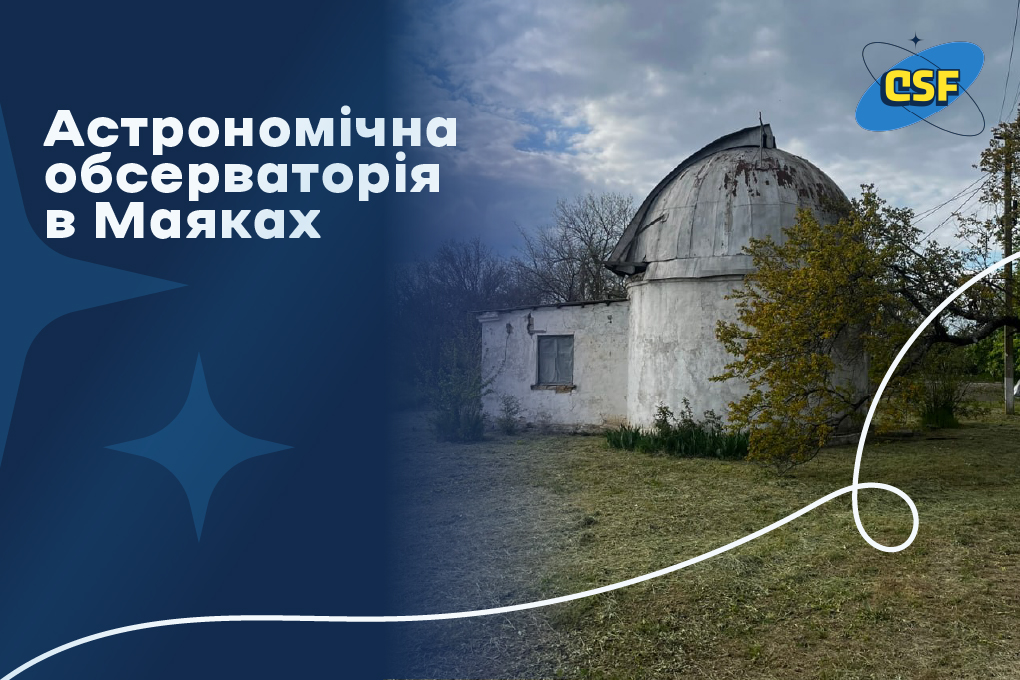
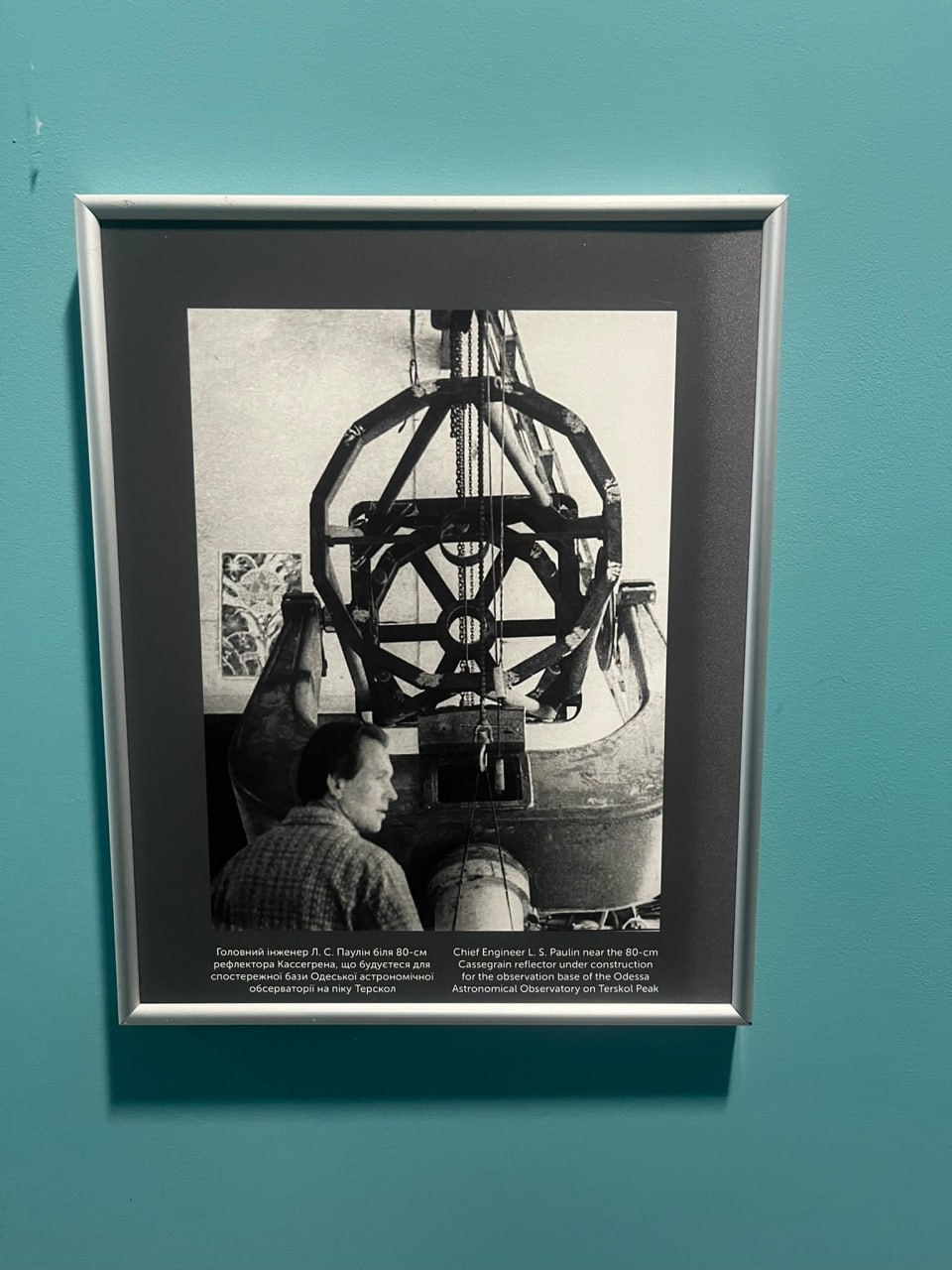
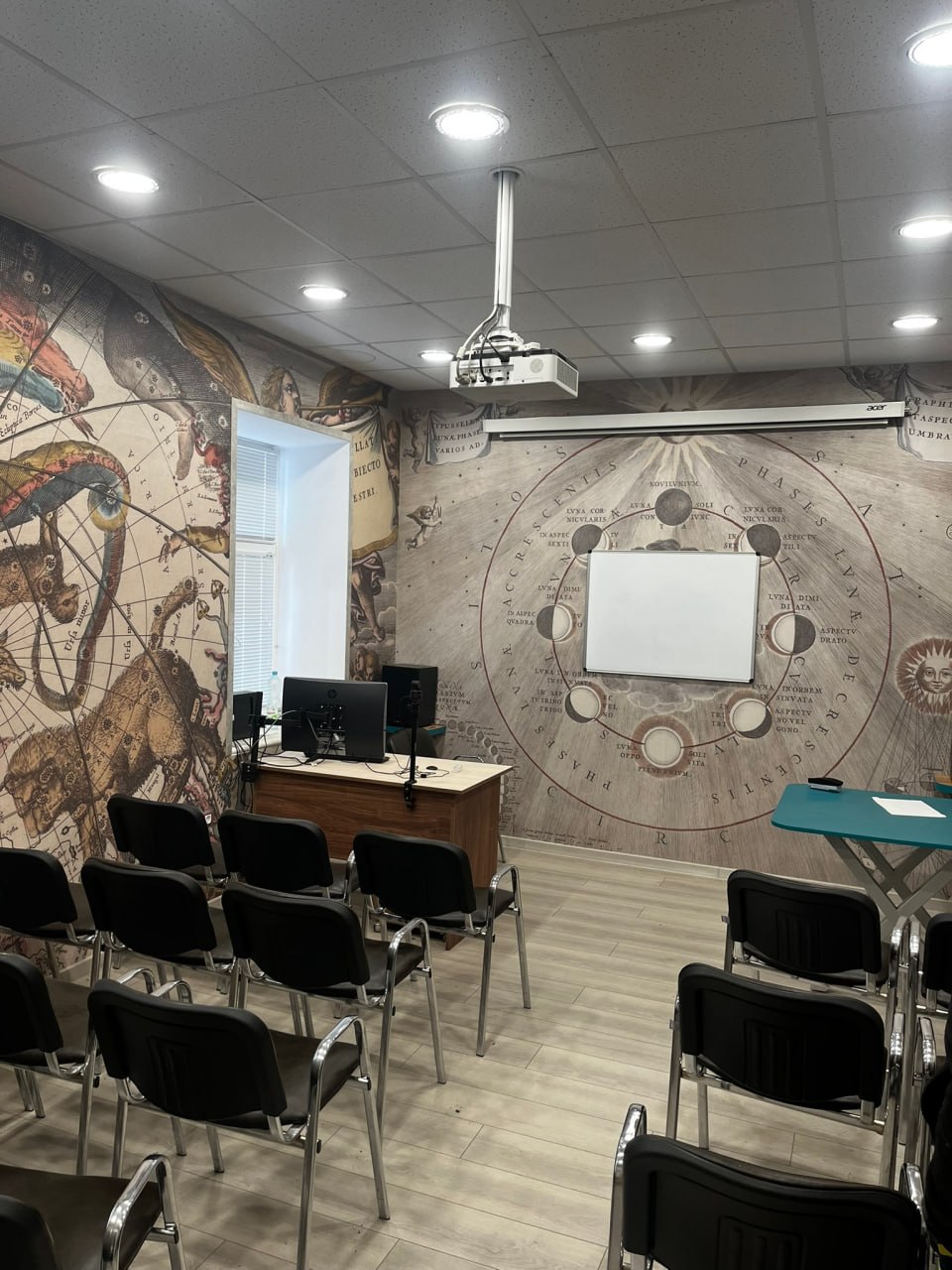
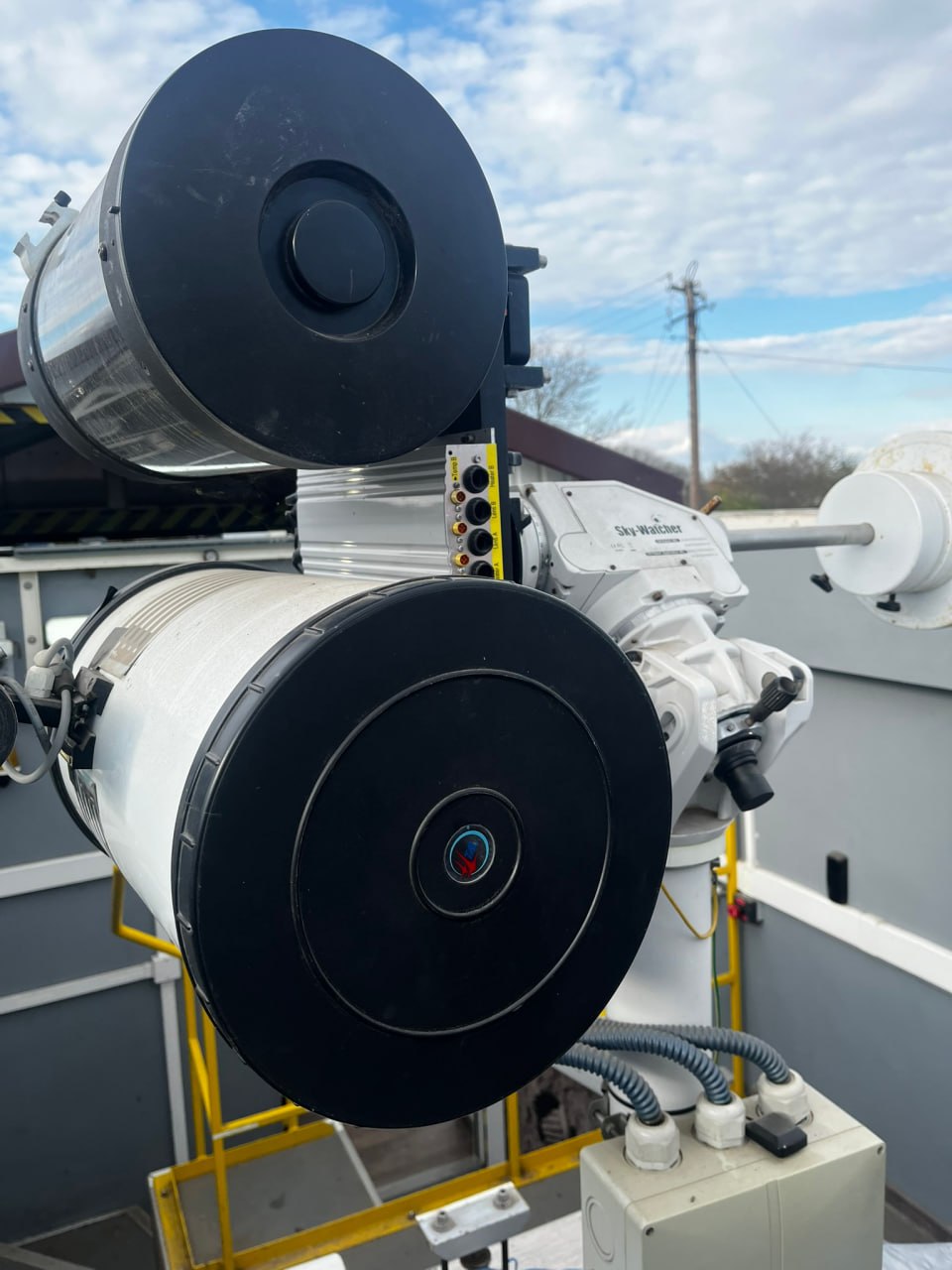
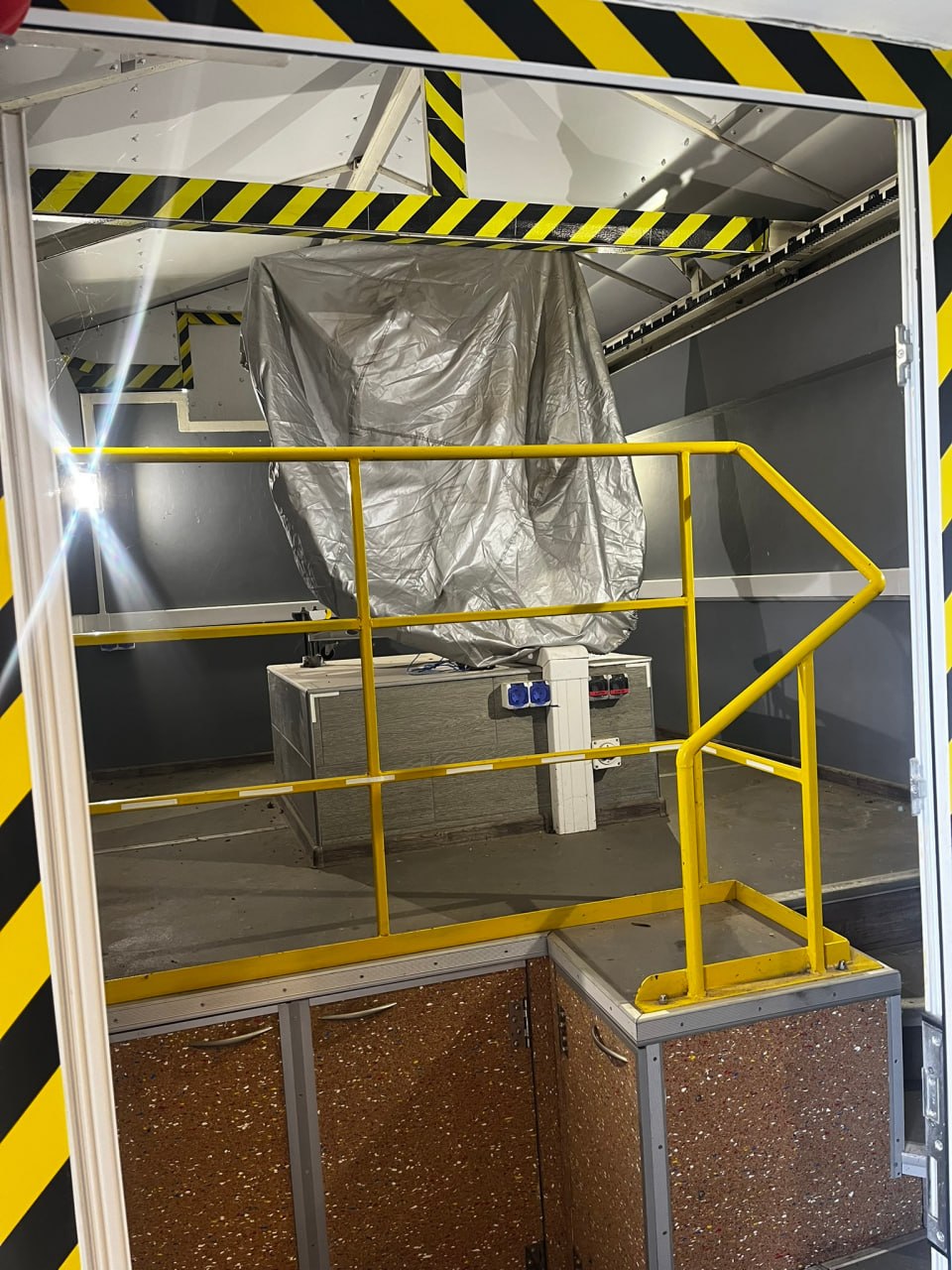
The Astronomical Observatory of Odesa I. I. Mechnikov National University, also known as the Mayaky Observation Station, was founded in 1957 as part of Odesa State University by Volodymyr Platonovych Tsesevich. It is home to an 80-cm telescope and the largest archive of astronomical photographs. Today, its main research areas include the photometry of variable stars, observations of geostationary satellites and meteors, and CCD observations of the Moon. The location — the village of Mayaky — was chosen because of its proximity to the Black Sea: equipment and materials were planned to be delivered by water. During the Soviet era, telescopes were built here by hand, from mechanical parts to focusers and tubes. The archival photographs preserved at the observatory show the process of assembly, mirror installation, wiring, and even the washing of the telescope’s main mirror.
“The guide joked that once, in order to clean the mirror, they had to send a very thin female student inside the telescope tube,” says Dmytro Shestakov, a CSF participant. He adds: “The observatory’s current condition evokes mixed feelings. Some of the equipment is not working or is being modernized. Because of the war, observations were effectively banned for several years. There are few staff members left; many people have left or now work in other fields. At the same time, the enthusiasm of those who stayed is still strongly felt.”
Meteor Patrols in Mayaky
The Observation Station is known, among other things, for its so-called meteor patrols. In the past, special meteor observing stations operated in Mayaky, Kryzhanivka, and near French Boulevard in Odesa. Meteor trails were recorded on wide-format film, while a rotating shutter made it possible to determine their speed. Sometimes, the work required two people, who manually tracked the object, keeping it in the center of the field of view. The film simultaneously recorded coordinates and time, which made it possible to calculate flight trajectories. When such observations were carried out from several locations, the motion of a meteor or satellite could be reconstructed with high precision. During the tour, you can also see old instruments used to search for asteroids and meteors. One example is the blink comparator — a device into which two photographic plates of the same area of the sky were inserted, while a lamp rapidly switched between the two images. If a new object appeared in one of the frames, such as an asteroid, it would begin to “blink.” This is how new celestial bodies were once discovered manually; today, it looks like a mechanical analogueof digital blinking.
A Unique Collection of Photographic Plates
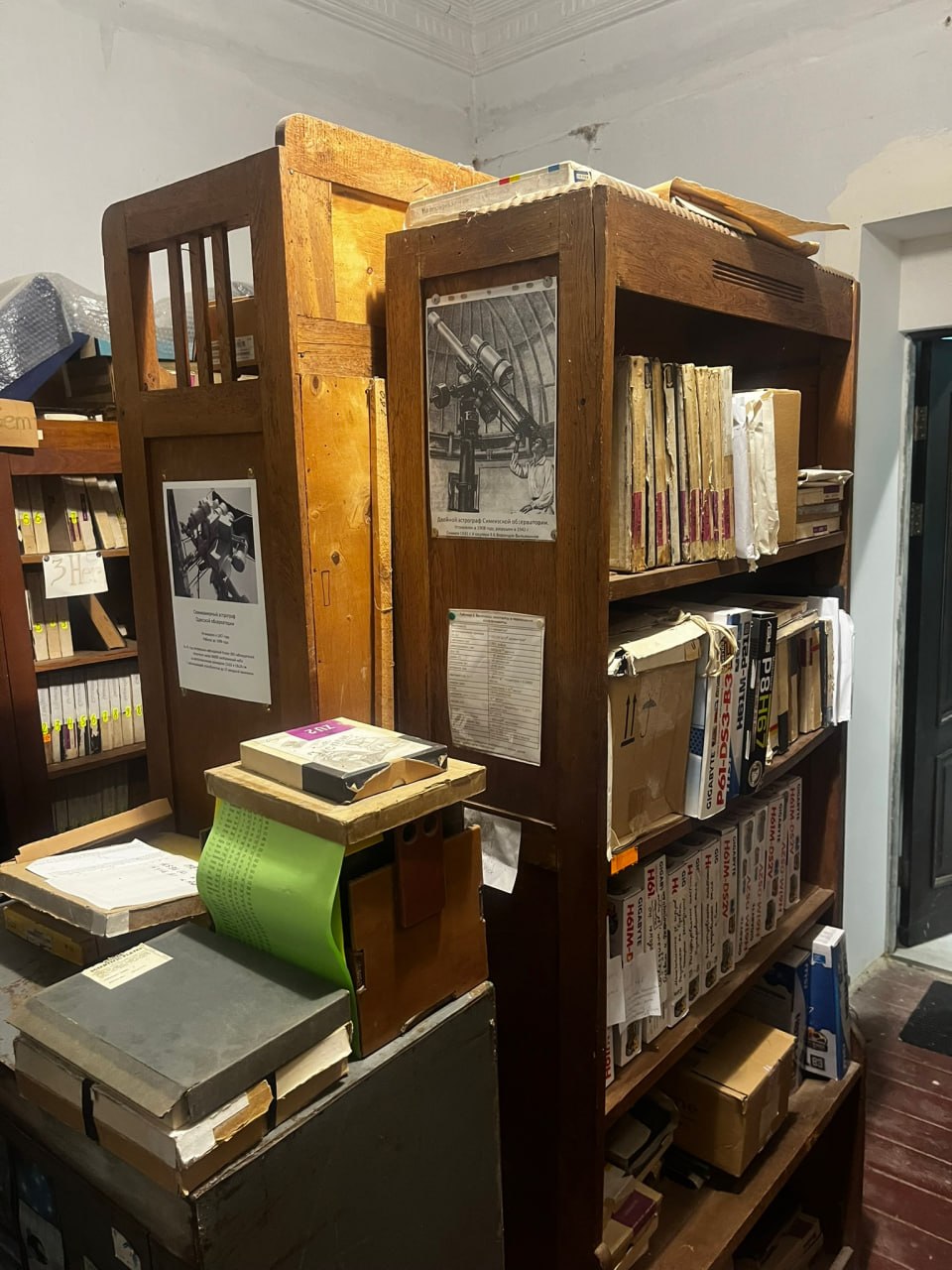
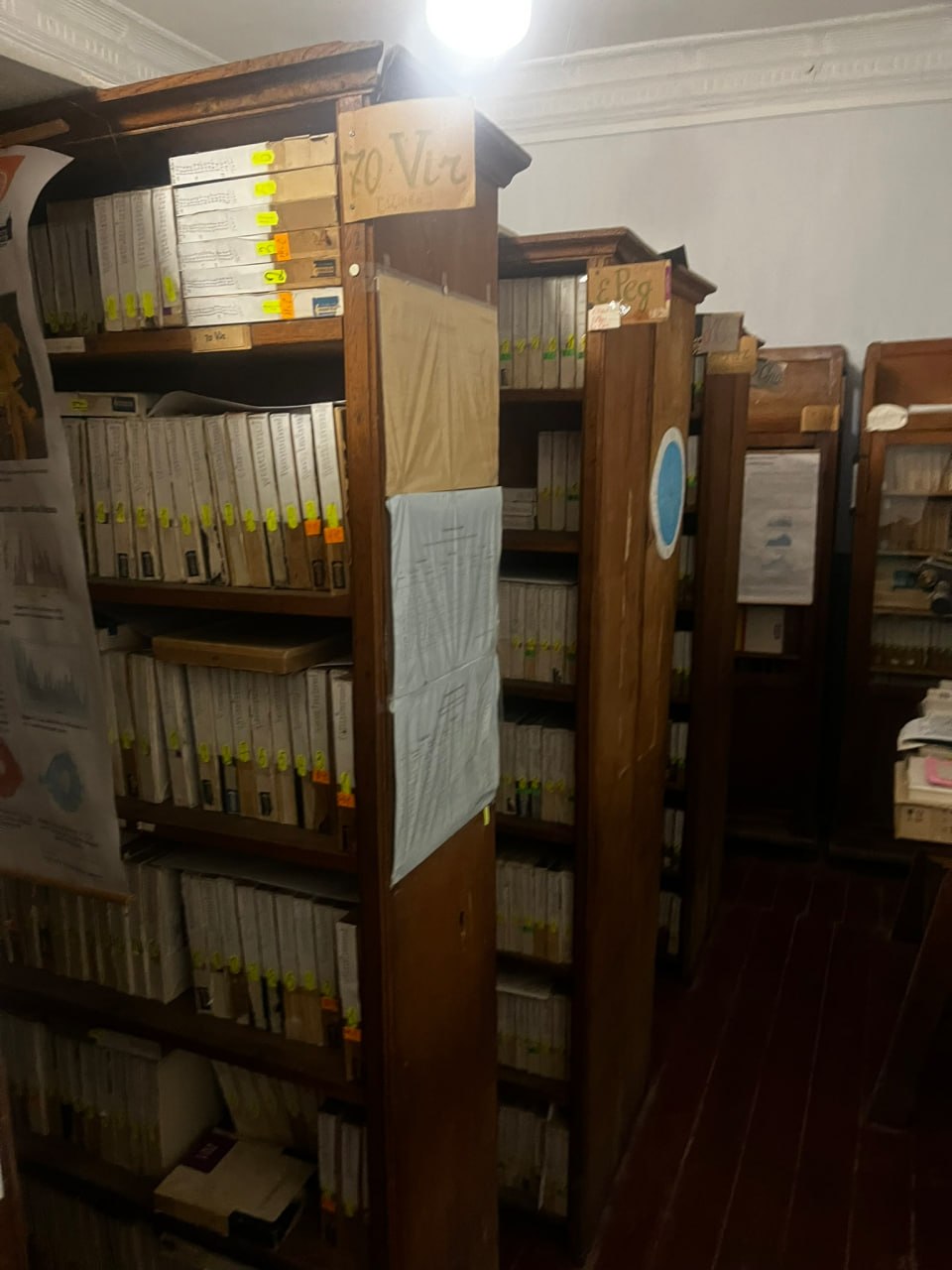
At the Mayaky Observation Station, there is a collection of images of the starry sky recorded on glass plates coated with a light-sensitive emulsion — a glass-plate archive, or skloteka. Over the observatory’s history, around 89,000 photographs were taken: a seven-camera astrograph captured the sky through different filters simultaneously on seven plates. This made it possible to determine the colors and characteristics of celestial objects, almost like a simplified form of spectroscopy. In several rooms of the administrative building, long cabinets filled with boxes still preserve these images. Each box contains 15–17 glass plates. Part of the archive dates back to the early 20th century. The plates were originally used for asteroid observations, but later Volodymyr Tsesevich brought them to Odesa for the study of variable stars. Among them are even plates that Ukrainian astronomers managed to evacuate from the observatory in Simeiz after the annexation of Crimea. The Mayaky collection is so extensive that, according to estimates, it is surpassed worldwide only by similar collections at Harvard Observatory in the United States and Sonneberg Observatory in Germany. Visitors can see special “tour” plates that no longer have significant scientific value, so they are allowed to carefully hold and examine them: star fields, the Pleiades, and perfectly round stars that look nothing like today’s noisy digital images. This is because the grain structure of photographic plates has a different nature from the pixelation of modern scanners.
Current Challenges in Astronomy
This is not only about science “for science’s sake,” but also about monitoring space debris, satellites, and the safety of orbital launches. During the tour, we learned that a collision between a satellite and debris in geostationary orbit can cost billions of dollars, which is why systems for monitoring near-Earth space are of strategic importance. Such projects have often been funded by international or military organizations.
Despite all the difficulties, people in Mayaky are still trying to keep the observatory alive. They are ready to welcome volunteers to help scan the archive, hold online meetings, and teach people how to work with photographic plates and telescopes. The conditions are quite rustic: sometimes people sleep right next to the telescopes, but the atmosphere feels more like a scientific expedition than a formal institution.
“You can feel that for the people who work there, this is not just a job, but a lifelong mission,” concludes Dmytro Shestakov.